
October 13, 2026
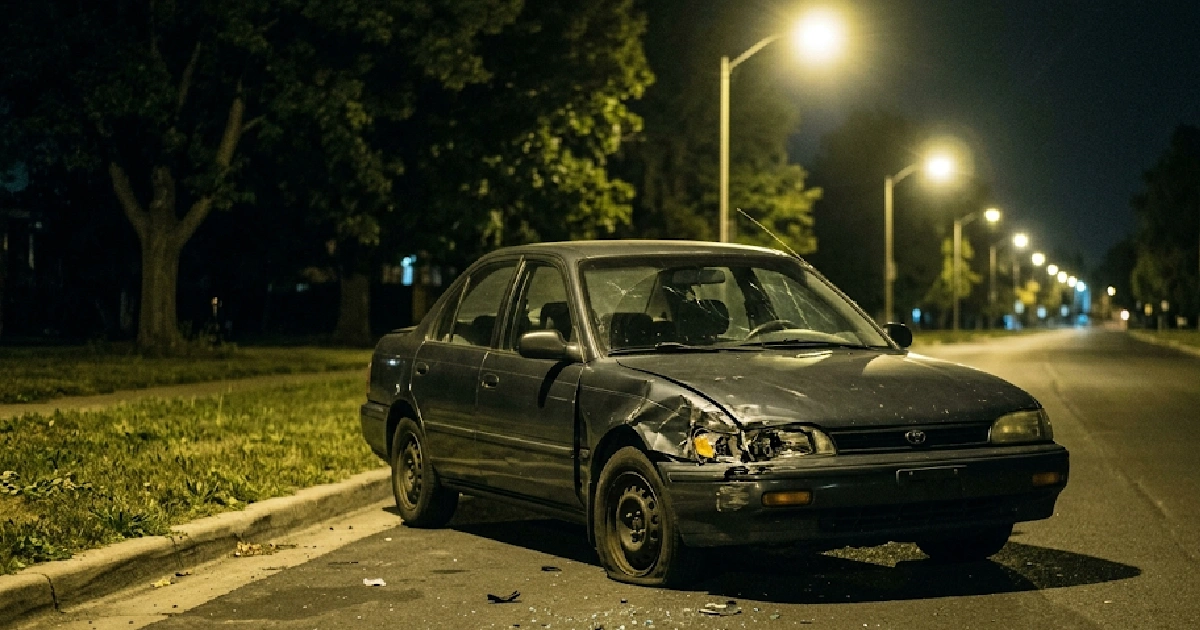
A hit and run accident leaves you dealing with everything a standard car accident produces, injuries, medical bills, lost work, property damage, and adds one more problem: the person who caused it is gone. That changes the claims process significantly, but it doesn’t eliminate your options.
Florida has specific rules that govern hit and run claims, and the coverage available to you depends heavily on what you do in the hours immediately after the crash. Here’s what you need to know.
Report the Accident Immediately
This is the most time-sensitive step after a hit and run, and it’s the one that most directly affects your ability to recover.
Call 911 and report the accident from the scene. Give the dispatcher everything you observed about the fleeing vehicle: make, model, color, direction of travel, and any portion of the license plate you caught. That information gives law enforcement the best chance of identifying the driver, and the police report documenting the hit and run is foundational to every insurance claim that follows.
Florida law requires you to report accidents involving injury or property damage over $500. A hit and run almost always meets that threshold. Don’t leave the scene to chase the other vehicle. Stay, document what you can, and wait for police.
If there are witnesses who saw the crash or the fleeing vehicle, get their names and contact information before they leave. Witness accounts can supplement your own observations about the at-fault vehicle and may help law enforcement identify the driver.
Document the Scene Thoroughly
Without the other driver present, your documentation of the scene carries more weight than it would in a standard accident. Photograph your vehicle’s damage from multiple angles before it’s moved. Capture the road, any debris, skid marks, and the surrounding area. If traffic cameras, business surveillance systems, or residential doorbell cameras are visible nearby, note their locations. That footage may capture the at-fault vehicle and needs to be preserved quickly before it overwrites.
Your own dashcam footage, if you have it, is potentially the most valuable evidence in a hit and run case. If your vehicle has a dashcam, preserve that footage immediately.
Your Primary Coverage Option: UM Insurance
This is where most hit and run claims actually get resolved. Uninsured motorist coverage, or UM, covers you when the at-fault driver either can’t be identified or carries no insurance. A driver who flees the scene is treated as an uninsured motorist under Florida law.
If you carry UM coverage on your own auto policy, that coverage applies to your medical bills, lost wages, pain and suffering, and other damages caused by the hit and run driver, up to your policy limit.
Florida law requires insurers to offer UM coverage. If you declined it in writing when you purchased your policy, you may not have this protection. Check your declarations page. If you don’t know whether you have UM coverage, your attorney can determine this quickly from your policy documents.
The process for a hit and run UM claim involves filing with your own insurer, who steps into the shoes of the unidentified at-fault driver and handles the claim as if they were the liable party. Your insurer’s financial interest in minimizing the payout doesn’t change just because you’ve been paying premiums for years. UM claims require the same careful handling as any other insurance claim, and an attorney who knows how Florida UM law works is a significant asset.
The Physical Contact Requirement
Florida’s UM statute includes a requirement that many people aren’t aware of. For a hit and run claim involving an unidentified driver, most standard UM policies require that there be actual physical contact between your vehicle and the unidentified vehicle.
This means a phantom vehicle scenario, where another driver cuts you off or forces you off the road without actually making contact, and then flees, may not trigger UM coverage under standard policy language. If your vehicle made contact with a guardrail, a tree, or another object while avoiding the phantom driver, but not with the other vehicle itself, the physical contact requirement may not be satisfied.
There are exceptions and policy variations. Some UM policies have broader language. Corroborating witness testimony that an unidentified vehicle was present and caused the crash can support a claim even without physical contact in some circumstances. An attorney reviews your specific policy language and the facts of your accident to determine what applies.
PIP Coverage
Florida’s no-fault PIP coverage applies to hit and run accidents just as it does to any other car accident. Your PIP pays 80% of reasonable medical expenses up to your $10,000 limit, regardless of fault and regardless of whether the other driver is identified.
The 14-day rule still applies. You must seek medical treatment within 14 days of the accident to access PIP benefits. Same-day or next-day evaluation after a hit and run is essential for this reason alone, in addition to the obvious medical reasons.
If the Driver Is Identified Later
Law enforcement sometimes identifies hit and run drivers days, weeks, or even months after the accident. If that happens, the claims picture changes.
You now have a known at-fault driver whose personal liability coverage, if they have any, becomes available. You also potentially have a claim for punitive damages, since fleeing the scene of an accident demonstrates conscious disregard for the safety of others in a way that ordinary negligence doesn’t.
Florida law makes leaving the scene of an accident involving injury a felony. A criminal conviction for hit and run is powerful evidence in a civil claim. The civil case doesn’t have to wait for the criminal process to conclude, but a conviction significantly strengthens your position.
Keep your attorney informed if law enforcement contacts you about identifying the driver. How you handle those conversations and what information you provide can affect both the criminal case and your civil claim.
Property Damage in Hit and Run Accidents
UM coverage typically addresses bodily injury. Property damage from a hit and run is handled differently.
If you have collision coverage on your auto policy, it covers repair or replacement of your vehicle regardless of fault, including in hit and run situations. Your insurer pays to repair your vehicle, and you pay your deductible.
If you don’t have collision coverage, property damage from an unidentified driver is harder to recover. Florida doesn’t require drivers to carry uninsured motorist property damage coverage, and many policies don’t include it. If the driver is later identified, their property damage liability coverage becomes available. If they’re never identified and you don’t have collision coverage, the property damage may not be recoverable from insurance.
This is one reason why carrying collision coverage matters in Florida, particularly given the state’s high rate of uninsured drivers.
What Happens if the Hit and Run Driver Had No Insurance
If law enforcement identifies the driver and they turn out to be uninsured, the situation looks like any other uninsured motorist claim. Your UM coverage applies. You may also have a direct claim against the driver personally, though an uninsured driver with no assets makes personal collection difficult.
The hit and run conduct itself, separate from the underlying crash, strengthens the damages picture. Leaving an injured person at the scene without rendering aid or exchanging information is conduct that courts and juries view seriously.
The Jacksonville and Northeast Florida Context
Hit and run accidents occur throughout Duval, St. Johns, and Clay Counties with enough regularity that law enforcement agencies in the area have experience investigating them. The Jacksonville Sheriff’s Office and Florida Highway Patrol both handle hit and run investigations, and the specific agency depends on where the crash occurred.
High-traffic corridors including I-95, I-295, Beach Boulevard, and Atlantic Boulevard see a disproportionate share of these accidents, particularly during late night and early morning hours when traffic is lighter and drivers who have been drinking or who have license issues are more likely to flee.
Surveillance infrastructure varies by location. Downtown Jacksonville and commercial corridors along major roads often have camera coverage that rural areas don’t. Knowing where to look for footage quickly is part of what an experienced attorney brings to a hit and run investigation.
Steps to Take in the Days Following a Hit and Run
Notify your insurer of the accident promptly. Most policies require timely reporting, and delay can create problems with your UM claim. Report the basic facts: the accident occurred, the other driver fled, you’re seeking medical treatment, and you have an attorney or are in the process of retaining one.
Keep detailed records of your symptoms and how they develop. Hit and run accidents often involve the same delayed symptom onset as other car accidents. A symptom journal that documents daily pain levels and functional limitations creates a contemporaneous record that supports your damages claim.
Don’t give a recorded statement to your own insurer without talking to an attorney first. Your insurer is now a claims adversary in the UM process, even though they’re your own insurance company.
Don’t Navigate This Alone
Hit and run claims involve layers that standard car accident claims don’t. The physical contact requirement, the UM process against your own insurer, the possibility of identifying the driver later, and the intersection of criminal and civil proceedings all require someone who knows how Florida’s system works.
Martino & McCabe handles hit and run accident claims throughout Ponte Vedra Beach, Jacksonville, St. Johns County, Duval County, and Clay County. If you’ve been hurt and the driver fled, you still have options. The first step is understanding what they are.
Call (904) 999-4657 or reach out at consultation@martinomccabe.com for a free consultation.
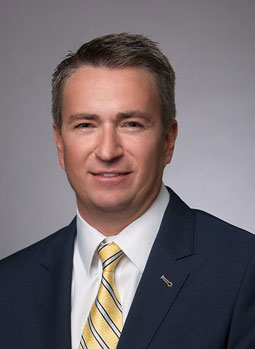
Michael J. McCabe, is a partner and owner of Martino & McCabe and practices in the areas of personally injury, auto accidents, and premises liability. He is a licensed Professional Engineer and received his Bachelor of Science in Civil Engineering from Florida State University. He earned his Juris Doctor degree from Florida Coastal School of Law in 2005 while continuing to work as a Professional Engineer.