
October 13, 2026
When a product fails in a way that injures someone, the legal framework that applies is different from standard negligence cases. You don’t have to prove the manufacturer was careless in the traditional sense. You have to prove the product was defective and that the defect caused your injury. That distinction makes product liability cases both more straightforward in some ways and more technically demanding in others.
Florida product liability law gives injured consumers meaningful rights against manufacturers, distributors, and retailers whose defective products cause harm. Here’s how these cases actually work.
Three Types of Product Defects
Florida product liability claims fall into three categories based on the nature of the defect. Understanding which type applies to your case determines how the claim is built and what evidence is needed.
Design defects exist when the product’s design itself is inherently dangerous, meaning every unit manufactured according to that design shares the same flaw. A vehicle with a roof structure that collapses at a force level it should withstand. A power tool without adequate blade guards. A children’s toy with a shape that creates a choking hazard. The problem isn’t a manufacturing mistake on one unit. It’s a flaw in how the product was conceived.
Design defect claims require establishing that a safer alternative design existed, that the manufacturer knew or should have known about the risk, and that the risk outweighed the utility of the design choice. Expert testimony on both the defective design and the feasible alternative is typically essential.
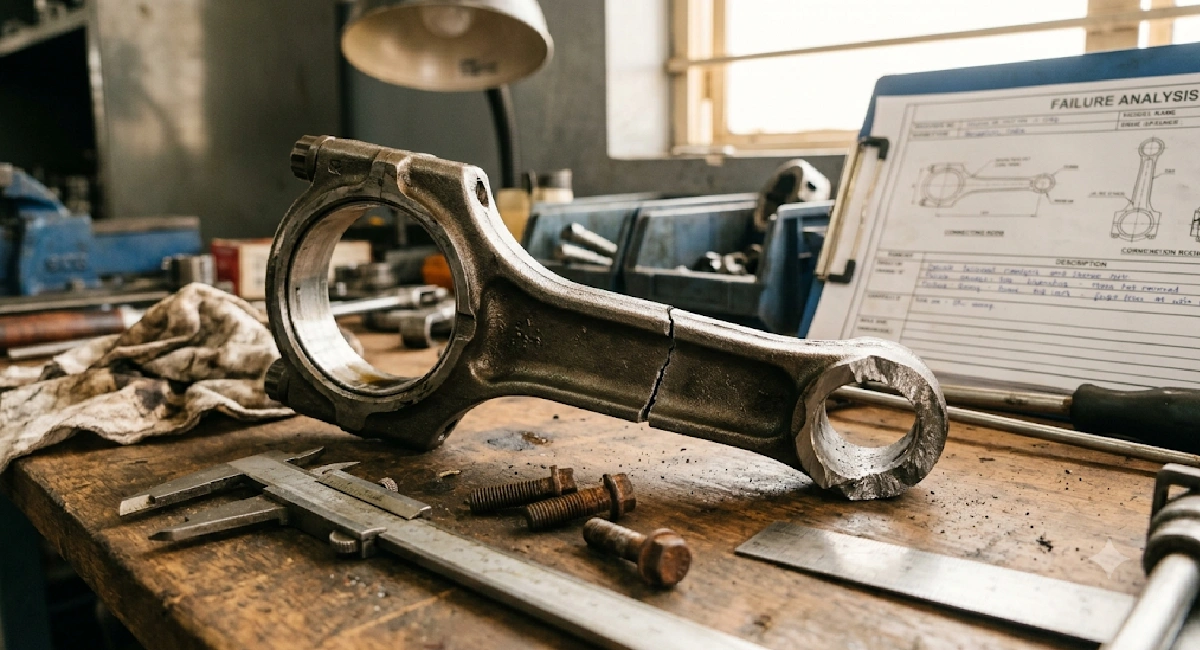
Manufacturing defects occur when a specific unit deviates from the intended design during the production process. The design was sound, but something went wrong in making this particular product. A batch of medication with incorrect active ingredient concentration. A vehicle part that wasn’t properly welded. A food product contaminated during processing.
Manufacturing defect claims require establishing that the specific product that injured you deviated from its intended design specifications and that this deviation caused your injury. The product itself, or what remains of it, is often the most important evidence.
Failure to warn defects arise when a product carries risks that aren’t obvious to users and the manufacturer failed to provide adequate warnings or instructions. A medication that causes serious interactions with common over-the-counter drugs without disclosing the risk. A cleaning product that produces toxic fumes when mixed with another common household chemical without warning labels. A power tool that requires specific safety precautions the manufacturer didn’t communicate.
These claims require establishing that the risk was known or knowable to the manufacturer, that an adequate warning would have reached and been followed by the user, and that the absence of the warning caused the injury.
Who Can Be Held Liable
Florida’s product liability framework extends liability beyond just the manufacturer. The entire chain of distribution can be implicated.
The manufacturer of the finished product bears primary responsibility for defects in design, manufacturing, and warnings. Component part manufacturers can be liable when a defective component caused the finished product to fail. Distributors and wholesalers who introduced a defective product into the stream of commerce may be liable. Retailers who sold the defective product to the consumer can also face liability under Florida law.
This broad liability framework matters practically because manufacturers are sometimes judgment-proof, operating in foreign jurisdictions, or no longer in business. The ability to pursue distributors and retailers who sold the product provides additional recovery options when the manufacturer alone can’t satisfy a judgment.
Florida’s Strict Liability Standard
Florida applies strict liability to product defect cases. That means you don’t have to prove the manufacturer was negligent in the traditional sense of failing to exercise reasonable care. You have to prove the product was defective when it left the manufacturer’s control and that the defect caused your injury.
Strict liability shifts the focus from the manufacturer’s conduct to the product itself. A manufacturer who exercised every reasonable precaution but still produced a defective product is liable under strict liability. The consumer’s right to a safe product doesn’t depend on proving the manufacturer cut corners.
This is a more plaintiff-favorable standard than traditional negligence, which is why Florida’s approach to product liability gives injured consumers meaningful leverage against well-funded corporate defendants.
Comparative Fault in Product Liability Cases
Florida’s modified comparative fault rule applies to product liability cases. If the injured person misused the product in a way that contributed to the injury, their recovery is reduced by their percentage of fault. If they’re more than 50% at fault, they recover nothing.
Defense attorneys in product liability cases regularly argue product misuse, assumption of risk, and failure to follow instructions as grounds for reducing or eliminating the plaintiff’s recovery. A user who removed a safety guard from a piece of equipment and was then injured by the exposed component faces a comparative fault argument that requires careful handling.
The product liability framework also involves a defense called the state of the art defense, where the manufacturer argues the defect wasn’t discoverable given the scientific knowledge available at the time of manufacture. This defense is more commonly raised in design defect cases involving older products.
The Role of Engineering Expertise
Product liability cases are among the most technically demanding in personal injury law. Understanding why a product failed, how it deviated from its design specifications, what safer alternatives existed, and how the defect caused the specific injury requires genuine engineering expertise.
Michael McCabe’s background is directly relevant here. A civil engineering degree from Florida State University, seven years of civil, aviation, and structural engineering experience, and a general contracting license provide the technical foundation to evaluate product failures across a range of categories. Vehicle mechanical failures, structural defects in construction products, equipment malfunctions, and aviation component failures are all areas where his engineering background informs the case analysis directly.
This matters in ways that go beyond hiring an outside expert. When the attorney building your case understands the engineering at issue, the technical foundation of the claim is stronger, expert selection is more informed, and deposition preparation of defense experts is more effective. The technical and legal work reinforce each other rather than operating in parallel.
Common Florida Product Liability Cases
Vehicle defects are among the most litigated product liability cases. Defective airbags that deploy with excessive force, roof structures that collapse in rollover accidents, fuel systems that catch fire in rear-end collisions, and tire failures at highway speed all fall into this category. Vehicle defect cases frequently involve NHTSA records, prior complaints, recall history, and engineering analysis of the specific failure mechanism.
Medical device failures arise when implanted devices, surgical instruments, or diagnostic equipment fail in ways that harm patients. Hip implants that corrode prematurely, hernia mesh that causes chronic pain and complications, pacemakers with battery failures, and surgical instruments that break during procedures are all medical device liability scenarios. These cases often involve complex causation questions where medical and engineering expertise overlap.
Pharmaceutical claims involve medications that cause serious adverse effects that weren’t adequately disclosed, or that were contaminated during manufacturing. Mass tort pharmaceutical litigation often runs as class actions or multidistrict litigation rather than individual cases, though individual claims remain viable in appropriate circumstances.
Construction and industrial equipment defects are common sources of serious workplace injuries. Defective scaffolding, inadequate crane components, power tool failures, and fall protection equipment that doesn’t perform as represented all give rise to product liability claims that frequently overlap with workplace injury cases.
Consumer product failures range from defective children’s products to appliances that cause fires to recreational equipment that fails during normal use. These cases are diverse in their technical demands but share the same core framework: identify the defect type, establish it existed when the product left the manufacturer’s control, and prove it caused the injury.
Preserving the Evidence
The product itself is often the most critical piece of evidence in a product liability case. What remains of it after the incident, whether it’s a vehicle component, a piece of equipment, or a consumer product, needs to be preserved immediately.
Don’t allow the product to be repaired, returned, or discarded. Don’t allow a vehicle involved in an accident to be crushed or sold to a salvage yard before it’s been documented and examined. The physical evidence of the defect is what experts analyze to establish liability.
Photographs of the product and the defect immediately after the incident are essential. Packaging, instruction manuals, and warranty documentation should also be preserved. Lot numbers, serial numbers, and purchase records establish which specific unit was involved and trace it through the chain of distribution.
If the product was involved in a recall, that documentation is powerful evidence. Recall records establish that the manufacturer knew about the defect and acknowledged it. Prior complaints submitted to the CPSC or NHTSA about the same product provide additional evidence of the manufacturer’s knowledge.
Damages in Product Liability Cases
Product liability damages follow the same framework as other serious personal injury cases. Economic damages include past and future medical expenses, lost wages and earning capacity, and out-of-pocket costs related to the injury. Non-economic damages include pain and suffering, permanent injury and disfigurement, and loss of enjoyment of life.
Punitive damages are available in product liability cases when the manufacturer knew about the defect and consciously chose not to fix it or warn consumers. A manufacturer who received reports of injuries from a defective product, conducted an internal cost-benefit analysis, and determined that paying injury claims was cheaper than implementing a fix has engaged in the kind of conduct that supports punitive damages. When that evidence exists, it’s among the most powerful in civil litigation.
Federal Preemption Issues
Some product liability claims involving federally regulated products face preemption arguments, where manufacturers argue that federal regulatory approval of the product bars state law liability claims. This issue arises most frequently in pharmaceutical and medical device cases.
Preemption law in product liability is complex and has evolved significantly through Supreme Court decisions over the past two decades. Whether a federal approval preempts a state law claim depends on the specific regulatory framework, the type of defect alleged, and the nature of the federal approval. An attorney handling product liability cases needs to understand this area of law and evaluate preemption issues early in case assessment.
Get an Evaluation Before the Evidence Disappears
Product liability cases have the same statute of limitations considerations as other personal injury cases, with the added urgency that physical evidence can be lost, destroyed, or altered quickly after an incident. The product may be repaired or discarded. The manufacturer may become aware of the incident and dispatch their own investigators. Spoliation of evidence happens in product cases, and the earlier your attorney sends preservation letters and secures the evidence, the better protected your claim is.
Martino & McCabe evaluates product liability cases throughout Ponte Vedra Beach, Jacksonville, St. Johns County, Duval County, and Clay County. If you’ve been seriously hurt by a defective product, the technical and legal complexity of these cases makes early legal involvement essential.
Call (904) 999-4657 or reach out at consultation@martinomccabe.com for a free consultation.

Michael J. McCabe, is a partner and owner of Martino & McCabe and practices in the areas of personally injury, auto accidents, and premises liability. He is a licensed Professional Engineer and received his Bachelor of Science in Civil Engineering from Florida State University. He earned his Juris Doctor degree from Florida Coastal School of Law in 2005 while continuing to work as a Professional Engineer.