
October 13, 2026
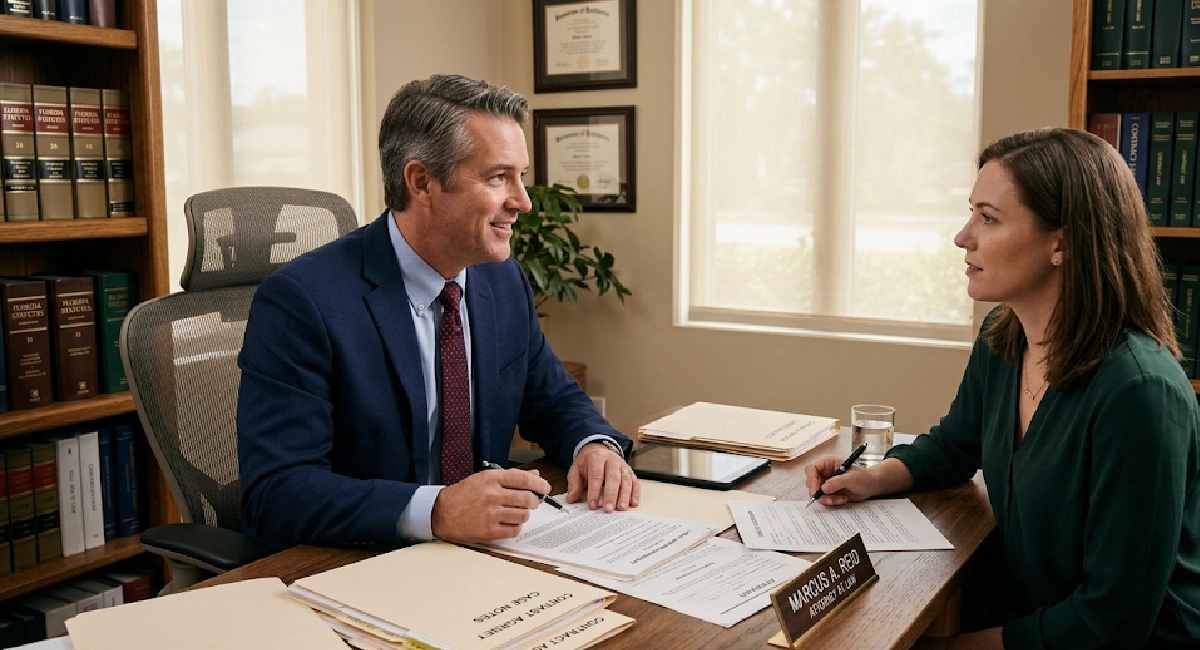
This is one of the most common questions we hear, and it deserves a straight answer rather than the obvious “yes, hire a lawyer” response you’d expect from a law firm. The honest answer is: it depends on the facts of your accident. But for most people dealing with injuries after a Florida car accident, the answer is yes, and the reasons go beyond what most people expect.
Here’s how to think through it.
When You Probably Don’t Need a Lawyer
There are situations where hiring an attorney isn’t necessary.
If you were in a minor fender bender, no one was injured, and the only claim is property damage to your vehicle, you can likely handle that directly with the insurance company. Property damage claims are relatively straightforward. You get an estimate, the insurer pays to repair or replace the vehicle, and the matter closes.
If your injuries were genuinely minor, resolved completely within a few weeks, required minimal treatment, and the insurer’s offer covers your actual out-of-pocket costs, the economics of hiring an attorney may not make sense on a small claim.
These situations are less common than people think. Minor accidents produce serious injuries more often than the initial assessment suggests, and what looks like a small claim in week one can look very different by week six.
When You Almost Certainly Do Need a Lawyer
Any time the following are present, handling the claim yourself carries real risk.
You have injuries that required medical treatment. Once medical treatment is involved, the claim has economic value beyond property damage, and the insurer has a financial incentive to minimize it. That incentive doesn’t align with yours.
You missed work because of the accident. Lost wages are a recoverable damage that needs to be documented and claimed correctly. Insurers don’t volunteer to calculate this for you.
Your injuries have lingered beyond a few weeks. Soft tissue injuries, spinal issues, and concussions that persist beyond the initial recovery period are more serious than they appeared. Cases involving ongoing treatment require more sophisticated handling than a quick settlement.
Liability is disputed. If the other driver or their insurer is arguing you share fault for the crash, or denying liability entirely, you need someone who can build and present the case for the other driver’s negligence.
The other driver was uninsured or underinsured. UM/UIM claims against your own insurer require knowing how to structure and pursue the claim correctly. Your insurer is not on your side in this process.
You were seriously injured. Fractures, spinal injuries, traumatic brain injuries, permanent disability, significant scarring. Cases involving serious injuries have large damages at stake and are defended aggressively by insurers. Handling these without representation is one of the most costly mistakes an injury victim can make.
A family member was killed. Wrongful death claims involve specific procedural requirements, multiple potential claimants, and damages calculations that require legal expertise.
What an Attorney Actually Does
People sometimes think hiring an attorney means handing the case over and waiting for a check. It’s more involved than that, and understanding what the work actually is helps clarify the value.
An attorney investigates the accident, gathers and preserves evidence, obtains and reviews medical records, identifies all available insurance coverage, handles all communication with insurance companies on your behalf, builds the damages picture, and negotiates with the insurer from a position of knowledge rather than guesswork.
If negotiation doesn’t produce a fair result, an attorney files suit, conducts discovery, deposes witnesses and experts, and takes the case to trial if necessary. The willingness to go to trial is what makes settlement offers serious. Insurers know the difference between attorneys who try cases and those who don’t.
Nicholas Martino’s Master of Laws in Trial Advocacy from Temple University Beasley School of Law exists because trying cases is a skill that requires specific training. When Martino & McCabe is handling your case, the insurer knows the case might actually go to trial. That changes what they put on the table.
Michael McCabe’s engineering background means technical evidence, accident mechanics, vehicle dynamics, and road conditions, gets evaluated by someone who genuinely understands it rather than farmed out to a third-party consultant. That matters in cases where the other side disputes how the crash happened or argues the physical evidence tells a different story.
The Fee Structure Removes the Financial Barrier
One of the main reasons people hesitate to hire an attorney is cost. Personal injury attorneys in Florida work on contingency. You pay nothing upfront, and you pay nothing unless your attorney recovers money for you. The fee is a percentage of the recovery, negotiated and agreed to before the attorney takes the case.
This means there’s no financial risk to getting a consultation. You find out what your case is worth, whether the insurer’s offer reflects it, and what your options are. That information costs you nothing. Deciding not to get it, and signing a release you later regret, does.
The Insurance Company Has Professional Help. You Should Too.
This is the clearest way to frame it.
The moment you file a claim, the insurer assigns a trained adjuster whose job is to minimize what gets paid out. Behind that adjuster is a team of attorneys the insurer retains to handle litigation. They do this every day. They know the system, the tactics, and how to move cases toward outcomes that favor the insurer.
Most injury victims are dealing with this process for the first time, while also managing their injuries, their medical appointments, their inability to work, and the financial stress all of that creates. Going into that situation without experienced representation is not a level playing field.
An attorney levels it.
The Timing Question
People often ask whether it’s too late to hire an attorney. The answer, in most cases, is that there’s still time, but waiting always carries costs.
Evidence disappears. Surveillance footage gets overwritten within days. Witnesses forget details. Vehicles get repaired and the damage pattern is lost. The earlier an attorney gets involved, the stronger the case that can be built.
Florida’s two-year statute of limitations for personal injury claims means the legal deadline is firm. But the practical deadline for building the strongest possible case is much shorter. Getting an attorney involved early isn’t just about the deadline. It’s about the quality of the case.
If you’ve already received a settlement offer or given a recorded statement, it’s still worth a consultation. An attorney can assess where things stand and whether there are options you haven’t considered.
What the Consultation Looks Like
A free consultation at Martino & McCabe is a real evaluation of your case, not a sales pitch. You describe what happened, your injuries, and where things stand with the insurer. You get an honest assessment of what your case is worth, whether the handling to date has created any problems, and what the path forward looks like.
If your case isn’t one where an attorney adds value, we’ll tell you that too.
The Bottom Line
For minor accidents with no injuries and clear property damage, you may not need a lawyer.
For anything involving injuries, lost work, disputed liability, serious damage, or an insurer who isn’t treating you fairly, the answer is yes. The question isn’t whether you can afford an attorney. It’s whether you can afford the gap between what you’ll recover without one and what you’d recover with one.
That gap is real, and in serious cases it’s substantial.
Martino & McCabe handles car accident cases throughout Ponte Vedra Beach, Jacksonville, St. Johns County, Duval County, and Clay County. The consultation is free and there’s no obligation.
Call (904) 999-4657 or reach out at consultation@martinomccabe.com.
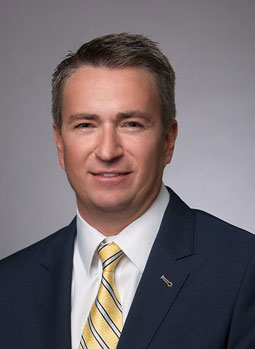
Michael J. McCabe, is a partner and owner of Martino & McCabe and practices in the areas of personally injury, auto accidents, and premises liability. He is a licensed Professional Engineer and received his Bachelor of Science in Civil Engineering from Florida State University. He earned his Juris Doctor degree from Florida Coastal School of Law in 2005 while continuing to work as a Professional Engineer.