
October 13, 2026
Distracted driving is the leading cause of car accidents in Florida. It’s also one of the most underreported because it’s largely invisible at the scene. A drunk driver gets a blood test. A distracted driver puts their phone down before the officer arrives. The evidence that matters most in these cases requires knowing where to look and moving fast enough to get it before it disappears.
If you’ve been hurt by a distracted driver in Florida, here’s what your rights look like and how these cases actually get built.
What Counts as Distracted Driving
Distraction behind the wheel falls into three categories that often overlap.
Visual distraction takes the driver’s eyes off the road. Manual distraction takes their hands off the wheel. Cognitive distraction takes their attention off driving even if their eyes are forward and their hands are on the wheel. Texting while driving is the most dangerous form because it combines all three simultaneously.
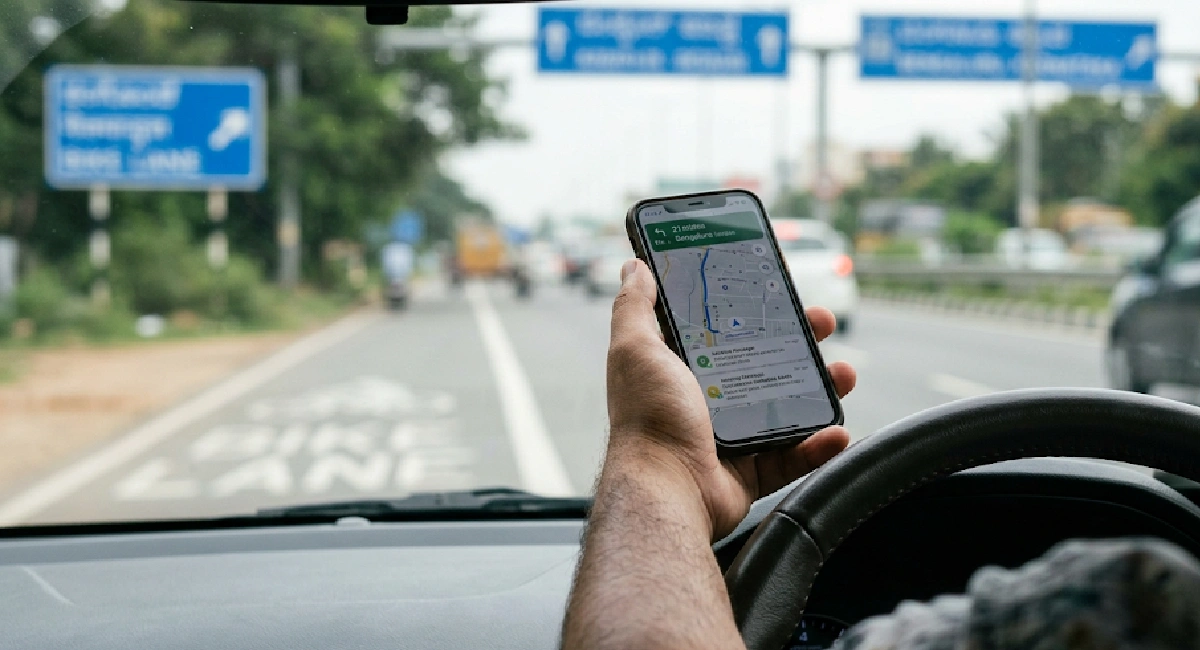
Cell phone use is the most visible and most litigated form of distracted driving, but it’s far from the only one. Eating and drinking, adjusting navigation or infotainment systems, reaching for objects in the vehicle, applying makeup, reading, and extended conversations with passengers all produce the same result: a driver whose attention isn’t on the road.
At 55 miles per hour, five seconds of eyes-off-road attention covers the length of a football field. That’s the window in which lives change.
Florida’s Distracted Driving Law
Florida enacted a hands-free law that prohibits handheld cell phone use while driving. Texting while driving is a primary offense, meaning an officer can stop a driver solely for that conduct without needing another reason for the stop.
The law creates a legal baseline that matters in civil cases. A driver who was texting at the time of the crash was violating Florida law, and that violation is evidence of negligence. It doesn’t automatically win the case, but it establishes that the driver breached a legal duty in a specific and documented way.
Traffic citations issued at the scene for distracted driving violations go into the police report and become part of the evidentiary record in your civil claim.
The Core Evidence Problem
Distracted driving cases have a specific evidentiary challenge. Unlike drunk driving, where a blood test produces objective evidence of impairment, distracted driving evidence often has to be reconstructed after the fact. The driver puts their phone down. The crash is over. The officer arrives. Without specific investigative steps taken quickly, the evidence that the driver was distracted at the moment of impact may not be recoverable.
This is why the timing of legal involvement matters more in distracted driving cases than in almost any other type of car accident claim.
Cell Phone Records
Cell phone records are the most direct evidence of phone-based distraction, and they require a formal legal request to obtain. Carriers retain records of calls, texts, and data activity, but retention periods vary and records can be overwritten.
A subpoena or formal discovery request sent to the carrier produces records showing whether the at-fault driver was on a call, sending or receiving texts, or using data-intensive applications at the time of the crash. The timestamp precision of these records allows comparison to the documented time of the accident.
What the records show matters. A text sent 30 seconds before the crash, a call that was active at the moment of impact, or data activity consistent with social media use or navigation adjustment all place the driver’s attention off the road at the critical moment.
These records exist only if they’re requested before the carrier’s retention period expires. An attorney who moves immediately on a cell phone record request preserves evidence that a delayed approach loses.
Dashcam and Surveillance Footage
Video footage is increasingly available and increasingly decisive in distracted driving cases. Traffic cameras, business surveillance systems, and residential doorbell cameras may have captured the at-fault driver’s behavior in the moments before the crash, including visible phone use or erratic driving consistent with distraction.
Dashcam footage from your own vehicle, if you have one, may have captured the moments leading up to impact. The at-fault vehicle’s own dashcam, if equipped, may have recorded what the driver was doing.
This footage exists only briefly. Traffic camera and business surveillance systems typically overwrite on loops ranging from 24 hours to 30 days. Preservation letters sent immediately after the crash put the holders on notice that the footage must be preserved. Waiting a week to get an attorney involved in a case where footage existed is often too late.
Witness Accounts
Witnesses who observed the at-fault driver in the moments before the crash can establish distraction even when electronic evidence isn’t available. A witness who saw the driver looking down at their phone, not watching the road, or driving erratically before the impact provides direct observational evidence of the distraction.
Getting witness contact information at the scene is essential. Witnesses who leave without providing information are almost impossible to locate afterward. An attorney can conduct additional witness outreach, canvassing nearby businesses and residences for anyone who may have observed the accident from a position that isn’t obvious at the scene.
The At-Fault Driver’s Own Statements
What the driver says at the scene and in deposition matters. Officers sometimes document admissions at the scene: “I was looking at my phone,” “I didn’t see the light change,” “I was reaching for something.” These admissions go into the police report and become part of the record.
In deposition, under oath, the at-fault driver has to answer questions about what they were doing in the moments before the crash. Inconsistencies between what they told the officer, what the cell phone records show, and what they testify to in deposition go directly to credibility and can establish both the distraction and consciousness of wrongdoing.
Proving Fault and Damages
Establishing that the driver was distracted satisfies the breach element of negligence. The full liability analysis still requires showing that the distraction caused the crash and that the crash caused your injuries.
Accident reconstruction can establish the driver’s speed, braking behavior, and reaction time in the moments before impact. A driver who didn’t brake at all before hitting your vehicle at highway speed, whose cell phone records show active data use at the time of impact, presents a strong liability picture that’s difficult to contest.
The damages analysis in a distracted driving case is the same as in any serious car accident case. Medical expenses past and future, lost wages and earning capacity, pain and suffering, permanent injury, and loss of enjoyment of life. In cases where the distraction was egregious, particularly where the driver had a prior history of distracted driving violations or where the evidence shows prolonged phone use leading up to the crash, punitive damages may be worth evaluating.
Commercial Drivers and Employer Liability
When the distracted driver was operating a vehicle as part of their job, a second defendant enters the picture: the employer.
Florida law holds employers vicariously liable for the negligent acts of employees committed within the scope of their employment. A delivery driver who was texting while on a delivery route, a sales representative who was making calls while driving between client meetings, or a truck driver using a handheld device in violation of federal commercial vehicle regulations all create employer liability alongside the individual driver’s liability.
Federal regulations impose specific restrictions on handheld device use by commercial drivers that are stricter than Florida’s general hands-free law. Violations of those regulations by a commercial driver constitute negligence per se and create a direct liability path against both the driver and the carrier.
Michael McCabe’s engineering background and familiarity with commercial vehicle regulations is relevant when distracted driving cases involve commercial vehicles. Understanding how the federal regulations apply, what records the carrier is required to maintain, and how to evaluate the technical evidence in a commercial vehicle case is part of what distinguishes these cases from standard passenger vehicle claims.
Jacksonville and Northeast Florida Context
Distracted driving crashes cluster heavily along Jacksonville’s high-traffic corridors, where vehicle speeds are higher and the consequences of attention lapses are more severe. I-95, I-295, Beach Boulevard, and the stretch of US-1 through St. Johns County all see significant distracted driving crash involvement.
The growth of Northeast Florida, with more drivers navigating unfamiliar roads and heavy reliance on navigation apps, creates specific distraction patterns. Drivers adjusting navigation while merging or approaching intersections is a scenario we see repeatedly in cases throughout Duval, St. Johns, and Clay Counties.
What to Do After a Distracted Driving Accident
Document the scene immediately. If you observed the driver on their phone or engaged in distracting behavior before the crash, note it specifically in what you tell the police officer. That observation in the police report creates a contemporaneous record.
Preserve your own dashcam footage if your vehicle has one. Don’t allow the vehicle to be repaired or the dashcam system to be reset before the footage is downloaded.
Note the locations of any cameras in the area that might have captured the crash or the at-fault driver’s behavior in the moments leading up to it.
Contact an attorney the same day if possible. The cell phone record request and preservation letters for surveillance footage need to go out quickly. In distracted driving cases, the evidentiary window closes faster than in almost any other type of car accident claim.
The Right Attorney Makes a Difference
Distracted driving cases are won through investigation. The cell phone records, the footage, the witness accounts, and the deposition of the at-fault driver are the building blocks. An attorney who knows what to look for, who moves fast enough to preserve it, and who knows how to present it effectively has a fundamentally different case than one who treats these claims like generic rear-end collisions.
Nicholas Martino’s trial advocacy training and Michael McCabe’s technical background combine to build and present distracted driving cases across the full range of complexity, from straightforward phone-use cases to commercial vehicle matters with federal regulatory dimensions.
Martino & McCabe handles distracted driving accident cases throughout Ponte Vedra Beach, Jacksonville, St. Johns County, Duval County, and Clay County. If you’ve been hurt, the evidence that proves it needs to be preserved now.
Call (904) 999-4657 or reach out at consultation@martinomccabe.com for a free consultation.

Michael J. McCabe, is a partner and owner of Martino & McCabe and practices in the areas of personally injury, auto accidents, and premises liability. He is a licensed Professional Engineer and received his Bachelor of Science in Civil Engineering from Florida State University. He earned his Juris Doctor degree from Florida Coastal School of Law in 2005 while continuing to work as a Professional Engineer.