
September 29, 2026
Florida has one of the highest rates of uninsured drivers in the country. Estimates consistently put the percentage of uninsured Florida motorists between 20 and 26 percent, meaning roughly one in four drivers on the road has no liability insurance at all. If one of them hits you, your ability to recover for your injuries depends heavily on coverage you may or may not have purchased for yourself.
That coverage is called uninsured motorist coverage, or UM. It’s one of the most important protections available to Florida drivers, and one of the most commonly misunderstood.
What Uninsured Motorist Coverage Actually Does
UM coverage steps in when the at-fault driver either has no insurance or doesn’t have enough insurance to cover your damages. It’s your own coverage, purchased as part of your auto policy, that pays when the person who hurt you can’t.
There are two versions.
Uninsured motorist coverage applies when the at-fault driver carries no liability insurance at all. If they hit you and have nothing, your UM policy is what covers your medical bills, lost wages, and pain and suffering beyond what PIP pays.
Underinsured motorist coverage, sometimes called UIM, applies when the at-fault driver has insurance but not enough to cover your actual damages. Florida’s minimum bodily injury liability requirement, where it exists, is $10,000 per person. That doesn’t go far in a serious accident. UIM covers the gap between what their policy pays and what your damages actually are, up to your UIM limit.
In Florida, these two coverages are typically sold together as UM/UIM coverage.
Florida Doesn’t Require Bodily Injury Liability Coverage
This is the part that surprises most people. Florida law does not require drivers to carry bodily injury liability insurance. The mandatory minimums are $10,000 in PIP and $10,000 in property damage liability. That’s it.
A driver can be fully compliant with Florida’s insurance requirements and carry zero coverage for the injuries they cause to someone else. That’s the gap UM/UIM coverage is designed to fill.
The 2023 tort reform that changed Florida’s comparative fault rules and reduced the statute of limitations did not address this coverage gap. Uninsured and underinsured drivers remain a significant and ongoing problem on Florida roads.
How UM/UIM Coverage Works in Practice
When you’re hurt by an uninsured driver, you file a UM claim with your own insurer. Your insurer essentially steps into the shoes of the at-fault driver and handles the claim as if they were the liable party.
Here’s where it gets complicated. Your own insurer, the one you’ve been paying premiums to, now has a financial interest in minimizing your claim. They will investigate the accident, evaluate your injuries, and make coverage determinations, all with the goal of paying out as little as possible. The friendly relationship you had with your insurer when you were paying premiums changes when you’re filing a large UM claim.
UM claims in Florida are governed by your policy terms and by Florida’s bad faith statutes. If your insurer unreasonably refuses to pay a fair amount, you may have a bad faith claim against them in addition to the underlying UM claim. An attorney who handles UM cases knows how to structure the claim to preserve those options.
Stacked vs. Non-Stacked Coverage
Florida gives drivers a choice when purchasing UM coverage: stacked or non-stacked. The difference matters significantly if you have multiple vehicles on your policy.
Stacked coverage allows you to combine the UM limits across all vehicles on your policy. If you have three vehicles each with $100,000 in UM coverage, stacked coverage gives you $300,000 in total available protection for a single accident.
Non-stacked coverage limits you to the UM limit on the specific vehicle involved in the accident, regardless of how many other vehicles you insure with the same company.
Stacked coverage costs more. For most people with multiple vehicles, it’s worth it. A serious accident with an uninsured driver can produce damages that far exceed a single vehicle’s UM limit. Stacked coverage is the only way to access the full protection you’ve been paying for across your fleet.
Rejecting UM Coverage
Florida law requires insurers to offer UM coverage. Drivers can reject it in writing. If you rejected UM coverage when you purchased your policy, you may have no protection when an uninsured driver hits you beyond what PIP covers.
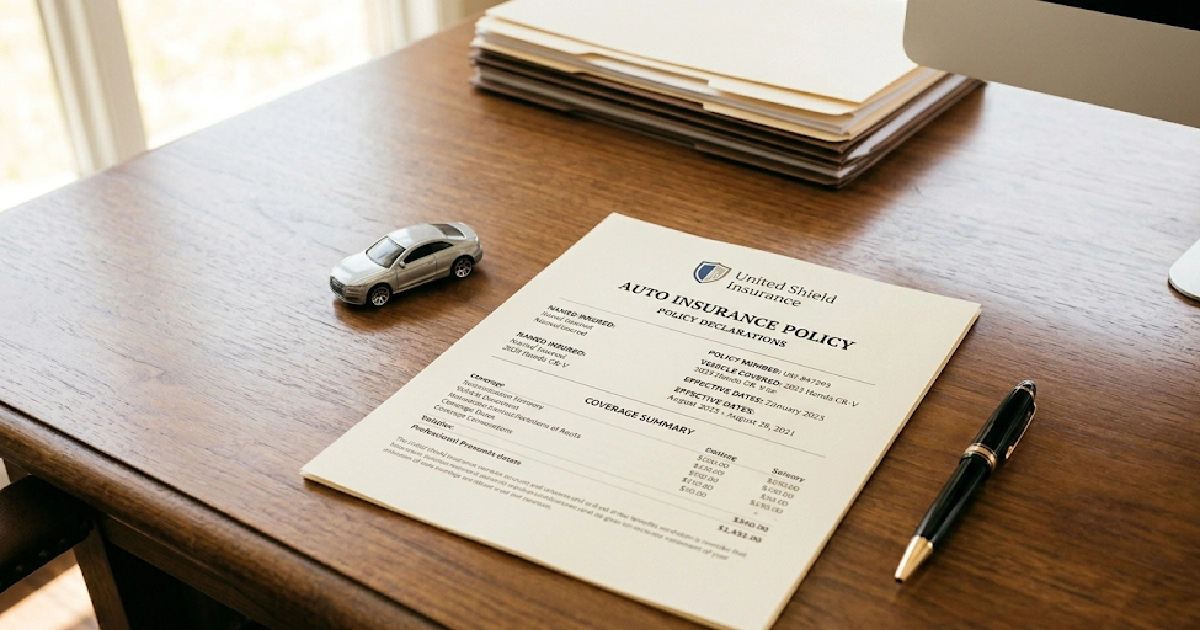
Many people reject UM coverage to lower their premium without fully understanding what they’re giving up. If you’re not sure whether you have UM coverage, or whether you rejected it at some point, check your declarations page. Your policy documents will show the coverages you carry and the limits.
If you rejected UM coverage and have since been in an accident with an uninsured driver, your options are more limited but not necessarily gone. Whether any coverage applies depends on the specific facts of your policy and your situation.
Hit and Run Accidents
UM coverage also applies to hit and run accidents where the at-fault driver leaves the scene and can’t be identified. If someone runs a red light, hits you, and drives away, your UM coverage is typically the only source of compensation available beyond PIP.
Florida has specific requirements for hit and run UM claims. In most cases, there must be physical contact between your vehicle and the unidentified vehicle. A phantom vehicle that causes you to swerve and crash without making contact may not trigger UM coverage under standard policy terms, though the specifics depend on your policy language.
Reporting the accident to police immediately matters in hit and run cases. A police report documenting that the accident involved an unidentified driver is an important part of the UM claim. Filing promptly also shows the claim is legitimate rather than fabricated after the fact.
What UM Coverage Pays
UM coverage isn’t limited to medical bills. It covers the full range of damages you could have recovered from the at-fault driver if they had adequate insurance.
That includes medical expenses, both past and future. Lost wages and reduced earning capacity. Pain and suffering. Permanent injury, disfigurement, and loss of enjoyment of life. In cases involving egregious conduct by the uninsured driver, punitive damages may be available in some circumstances.
The limit on what you can recover is your UM policy limit. This is why the amount of coverage you purchase matters. A $25,000 UM limit in a case involving $200,000 in damages leaves a significant gap. Purchasing higher UM limits, ideally matching your liability limits, is one of the most cost-effective insurance decisions you can make in Florida.
How UM Claims Interact With the At-Fault Driver
Having UM coverage doesn’t prevent you from pursuing the uninsured driver directly. If the at-fault driver has assets worth pursuing, your attorney can file suit against them personally. In practice, uninsured drivers often have limited assets, which is part of why they’re uninsured. But the option exists, and in some cases it’s worth pursuing.
When your UM insurer pays out on a claim, they typically acquire the right to pursue the at-fault driver themselves through a process called subrogation. Your attorney manages how this interacts with any direct claim you might have.
Why This Matters More in Jacksonville and Northeast Florida
Jacksonville’s size, its position as a major interstate corridor, and the economic mix across Duval, St. Johns, and Clay Counties mean uninsured drivers are a constant presence on local roads. We handle UM claims throughout this area and see firsthand how often the at-fault driver in a serious accident carries no coverage at all.
The areas around I-95, I-295, and US-1 see significant commercial and through traffic, including drivers from out of state who may carry minimal or no coverage under their home state’s requirements. Florida’s lack of a bodily injury liability mandate makes the problem worse.
Michael McCabe’s engineering background strengthens UM claims that involve disputed liability or questions about how the crash happened. When the uninsured driver is also disputing fault, the technical analysis of the accident becomes the foundation of the claim.
Check Your Coverage Before You Need It
The time to understand your UM coverage is before an uninsured driver hits you. Pull out your declarations page. Look at whether you have UM/UIM coverage, what the limits are, and whether it’s stacked or non-stacked. If the limits are low or you’re not sure you have coverage at all, talk to your insurance agent about what it would cost to increase them.
The premium difference between minimal and meaningful UM coverage is often smaller than people expect. The difference in outcome when an uninsured driver causes a serious accident is not.
If You’ve Already Been Hit by an Uninsured Driver
Martino & McCabe handles UM/UIM claims throughout Ponte Vedra Beach, Jacksonville, St. Johns County, Duval County, and Clay County. If the driver who hurt you has no insurance or not enough, your own UM coverage may be your primary path to fair compensation. How that claim gets handled matters.
Call (904) 999-4657 or reach out at consultation@martinomccabe.com for a free consultation.

Michael J. McCabe, is a partner and owner of Martino & McCabe and practices in the areas of personally injury, auto accidents, and premises liability. He is a licensed Professional Engineer and received his Bachelor of Science in Civil Engineering from Florida State University. He earned his Juris Doctor degree from Florida Coastal School of Law in 2005 while continuing to work as a Professional Engineer.