
October 13, 2026
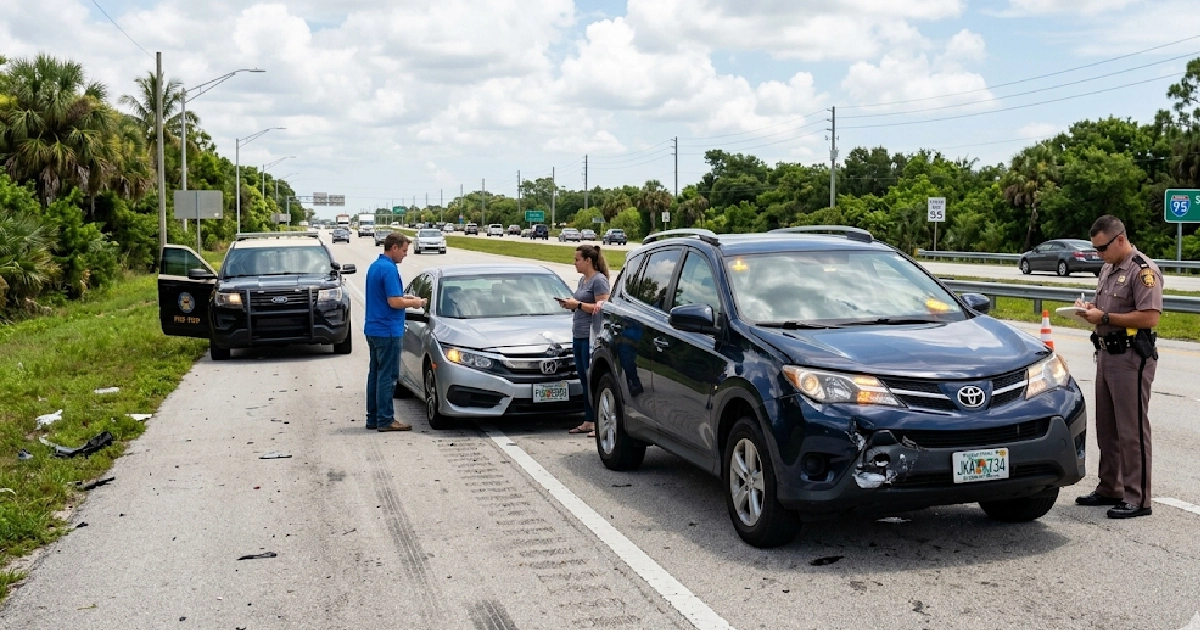
Most people have no idea what to do in the minutes and hours after a car accident. You’re shaken, possibly hurt, and trying to process what just happened while standing on the side of a road. The decisions you make in that window matter more than most people realize.
This is a straight walkthrough of what to do, in order, and why each step affects what comes next.
1. Check for Injuries and Call 911
Before anything else, check yourself and anyone else in your vehicle for injuries. If anyone is hurt, call 911 immediately. Don’t move injured people unless there’s an immediate danger like fire or oncoming traffic. Moving someone with a spinal injury can make it significantly worse.
Call 911 even if injuries aren’t obvious. Adrenaline masks pain. People walk away from crashes feeling fine and wake up the next morning unable to move their neck. A police report filed at the scene is also one of the most important pieces of documentation your case will have. Without it, the other driver can later dispute what happened or deny being at fault.
Florida law requires you to report accidents involving injury, death, or property damage over $500. In practice, call the police for anything beyond a minor parking lot tap.
2. Move to Safety if You Can
If the vehicles are driveable and staying in the roadway creates a hazard, move them to the shoulder or a nearby parking lot. Turn on hazard lights. If you can’t move the vehicle, get yourself and your passengers out of traffic and wait somewhere safe.
Don’t leave the scene. Florida law requires drivers involved in an accident to remain until police arrive and the exchange of information is complete. Leaving the scene of an accident involving injury is a felony.
3. Document Everything
Your phone is your most important tool right now. Use it.
Photograph the vehicles from multiple angles before anyone moves them. Get close-up shots of the damage and wide shots showing both vehicles’ positions relative to each other and to the road. Photograph skid marks, debris, traffic signals, road conditions, and anything else relevant to how the crash happened.
Photograph the other driver’s license, registration, and insurance card. Get their name, address, phone number, and the name of their insurer and policy number.
If there are witnesses, get their names and phone numbers before they leave. Witnesses have a way of disappearing once the scene clears.
Photograph your injuries. Bruising, lacerations, and visible trauma should be documented at the scene and again in the days that follow as they develop.
Don’t rely on your memory. You’ll think you’ll remember the details. You won’t, at least not accurately.
4. Be Careful What You Say
Don’t apologize. Don’t say “I’m fine.” Further, don’t tell the other driver or the police that the accident was partly your fault, even if you think it might have been.
That’s not about being dishonest. It’s about not making statements before you know all the facts. Adrenaline distorts perception. You may think you were partly responsible for a crash that was entirely the other driver’s fault. Statements made at the scene get used later.
Talk to the police when they arrive and give them an accurate account of what happened. That’s it. You don’t owe the other driver an explanation or a conversation.
5. Seek Medical Attention the Same Day
Go to the emergency room or an urgent care clinic the same day as the accident, even if you feel okay. This is important for two reasons.
First, many serious injuries don’t present symptoms immediately. Whiplash, concussions, soft tissue injuries, and spinal damage can all develop over hours or days. Getting evaluated right away means those injuries get caught and treated before they get worse.
Second, a gap between the accident and your first medical visit is one of the most common arguments insurers use to minimize claims. If you waited three days to see a doctor, the insurer will argue your injuries weren’t serious or weren’t caused by the crash. Same-day care closes that argument before it starts.
Tell the treating physician exactly how the accident happened and every symptom you’re experiencing, even ones that seem minor. Everything gets documented in the medical record, and that record is the foundation of your claim.
Jacksonville area hospitals including UF Health Jacksonville, Baptist Medical Center, and Memorial Hospital all have emergency departments equipped to evaluate accident-related trauma. If your injuries are less acute, urgent care and orthopedic clinics throughout Duval and St. Johns County can get you seen quickly.
6. Notify Your Insurance Company
Florida is a no-fault state, which means your own personal injury protection (PIP) coverage pays your initial medical bills and a portion of lost wages regardless of who caused the crash. You’re required to notify your insurer promptly after an accident.
Here’s what that means practically: call your insurer to report the accident, give them the basic facts, and let them know you’re seeking medical treatment. You are not required to give a recorded statement to your own insurer, and you are not required to give any statement at all to the other driver’s insurer without an attorney present.
The other driver’s insurance company will call you. They will be friendly. Their job is to get you to say something that reduces or eliminates their liability. You are not obligated to speak with them, and in most cases you shouldn’t.
7. Don’t Sign Anything
If the other driver’s insurer contacts you with a settlement offer in the days or weeks after the accident, do not sign anything.
Early settlement offers are almost always below the actual value of your claim. The insurer is moving fast because they want to close the case before you understand what your injuries actually cost. Once you sign a release, the case is over. You can’t go back.
This is especially true if you haven’t finished treatment. You can’t know the full value of your medical damages until you know the full extent of your injuries. Settling before that point almost always means settling for less than you deserve.
8. Contact a Car Accident Attorney
You don’t need to wait to hire an attorney. In fact, the earlier you do, the better. An attorney can communicate with the insurance companies on your behalf, preserve evidence before it disappears, and make sure your case is being built correctly from the start.
Attorneys who handle car accident cases in Florida work on contingency. You pay nothing unless they recover money for you. There’s no cost to a consultation, and no financial risk to getting advice before you make decisions you can’t undo.
Martino & McCabe handles car accident cases throughout Ponte Vedra Beach, Jacksonville, and St. Johns County. Michael McCabe’s engineering background means technical questions about how the crash happened, vehicle damage, and road conditions get handled by someone who actually understands them. Nicholas Martino’s trial advocacy training means that if the insurer won’t pay fairly, the case is ready for court.
The sooner you have an attorney, the better position you’re in. Evidence gets lost. Witnesses forget. And Florida’s two-year statute of limitations means the clock is already running.
The Short Version
Call 911. Document everything. Get medical attention the same day. Don’t give recorded statements. Don’t sign anything. Talk to an attorney before you make any decisions.
That sequence protects your health and your claim. Getting any part of it wrong makes both harder to recover.
Call (904) 999-4657 or reach out at consultation@martinomccabe.com. The consultation is free.
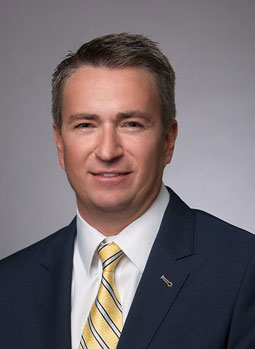
Michael J. McCabe, is a partner and owner of Martino & McCabe and practices in the areas of personally injury, auto accidents, and premises liability. He is a licensed Professional Engineer and received his Bachelor of Science in Civil Engineering from Florida State University. He earned his Juris Doctor degree from Florida Coastal School of Law in 2005 while continuing to work as a Professional Engineer.