
October 13, 2026
Dealing with insurance after a car accident in Florida is confusing by design. The system involves multiple coverages, strict deadlines, and adjusters whose job is to pay out as little as possible. Most people don’t understand how any of it works until they’re already in the middle of it.
Here’s what you actually need to know before you make any decisions.
Florida Is a No-Fault State
This is the starting point for every Florida car accident insurance claim, and it’s the part that surprises most people.
Florida’s no-fault system means your own insurance pays your initial medical bills and a portion of your lost wages after an accident, regardless of who caused the crash. That coverage is called Personal Injury Protection, or PIP. Florida law requires every driver to carry a minimum of $10,000 in PIP coverage.
PIP covers 80% of reasonable medical expenses and 60% of lost wages up to that $10,000 limit. It does not cover pain and suffering. It does not cover the other driver’s damages. And $10,000 goes fast when you’re dealing with emergency room visits, imaging, and follow-up care.
The no-fault system was designed to reduce litigation over minor accidents. In practice, it creates a coverage gap that leaves seriously injured people without adequate compensation unless they pursue a claim against the at-fault driver.
The 14-Day Rule
This deadline catches people off guard. Florida law requires you to seek medical treatment within 14 days of your accident to be eligible for PIP benefits. Miss that window and your own insurance can deny coverage entirely.
This is one of the main reasons same-day or next-day medical care matters so much after a Florida car accident. It’s not just about your health. It’s about preserving your right to benefits you’ve been paying for.
PIP Doesn’t Cover Everything
Once PIP is exhausted, or for damages PIP doesn’t cover at all, you need to look at other sources.
The at-fault driver’s bodily injury liability coverage is the primary one. Florida does not currently require drivers to carry bodily injury liability insurance, which means a meaningful percentage of drivers on the road have no coverage for the injuries they cause. That’s a real problem in serious accident cases.
If the at-fault driver is uninsured or underinsured, your own uninsured/underinsured motorist coverage, called UM/UIM, becomes critical. UM/UIM covers the gap between what the at-fault driver’s policy pays and your actual damages. It’s one of the most valuable coverages you can carry in Florida, and one of the most commonly underutilized.
MedPay, or Medical Payments coverage, is an optional add-on that covers medical expenses regardless of fault, similar to PIP but sometimes with a higher limit. If you have it, it can supplement PIP coverage before you exhaust the limit.
When You Can Step Outside the No-Fault System
Florida’s no-fault system limits your ability to sue the at-fault driver for minor injuries. To pursue a claim against them directly for pain and suffering, your injuries must meet a threshold defined under Florida law: permanent injury, significant and permanent scarring or disfigurement, or significant and permanent loss of an important bodily function.
If your injuries meet that threshold, you can step outside the no-fault system and pursue a claim against the at-fault driver’s liability coverage. This is where serious car accident cases actually get resolved, and where the damages available to you go significantly beyond the PIP limit.
Determining whether your injuries meet that threshold is one of the first things an experienced car accident attorney evaluates.
Filing a PIP Claim
After an accident, notify your own insurance company promptly. Report the accident, let them know you’re seeking medical treatment, and ask them to open a PIP claim.
From there, your medical providers will bill your PIP coverage directly in most cases. Keep records of everything: every appointment, every bill, every explanation of benefits your insurer sends. Gaps in documentation give insurers room to dispute charges.
Your insurer may send you to an Independent Medical Examination, called an IME. Despite the name, these exams are conducted by physicians hired by the insurance company. They’re used to find reasons to cut off PIP benefits. If your insurer requests an IME, talk to an attorney before you go.
Filing a Claim Against the At-Fault Driver
If your injuries meet the threshold for stepping outside no-fault, or if your damages exceed your PIP limit, your attorney will file a claim against the at-fault driver’s bodily injury liability coverage.
This process starts with a demand letter sent to the at-fault driver’s insurer. The letter documents your injuries, your damages, and what you’re asking for. The insurer has a duty to respond in good faith. If they don’t, or if they refuse to offer a fair settlement, litigation becomes the next step.
A few things to know about this process.
The at-fault driver’s insurer is not your ally. Their adjuster may be polite, but their goal is to close your claim for as little as possible. Do not give them a recorded statement without an attorney. Do not accept their first offer without having an attorney review your case. Further, do not sign any release until you understand what you’re giving up.
Bad Faith Insurance Practices
Florida law requires insurers to handle claims in good faith. When they don’t, there are consequences.
Bad faith practices include unreasonably denying a claim, failing to investigate properly, making lowball offers without basis, or unreasonably delaying payment. If an insurer acts in bad faith, Florida law allows you to pursue additional damages beyond the original claim value.
This doesn’t come up in every case. But when an insurer is being unreasonable in ways that go beyond ordinary negotiation, it’s worth discussing with your attorney.
Comparative Fault and How It Affects Your Claim
Florida’s 2023 tort reform changed the state from pure comparative fault to modified comparative fault. Under the old system, you could recover damages even if you were 99% at fault, just reduced by your percentage. Under the new system, if you’re more than 50% at fault, you recover nothing.
Insurers know this. They use it. Arguing that you share fault for the crash is one of the primary tools adjusters use to reduce or deny claims. If the insurer is pushing a shared fault narrative, push back. The facts of the crash, not the adjuster’s characterization of them, determine liability.
Michael McCabe’s engineering background is directly relevant here. When an insurer disputes how a crash happened or argues that vehicle damage is inconsistent with the claimed impact, those arguments get evaluated by someone who understands vehicle dynamics, road conditions, and accident mechanics. That’s a meaningful advantage when the other side is trying to rewrite what the evidence shows.
The Bigger Picture
Florida’s insurance system puts real barriers between injured people and fair compensation. The no-fault structure limits initial claims. Coverage minimums are low. Uninsured drivers are common. And the 2023 tort reform changes tipped the scales further toward insurers.
None of that means you don’t have options. It means you need to understand the system and work it correctly.
An experienced car accident attorney knows how to navigate PIP claims, identify all available coverage sources, evaluate whether your injuries meet the threshold for stepping outside no-fault, and handle negotiations with carriers who aren’t acting in good faith. That knowledge is the difference between an inadequate payout and a recovery that reflects your actual losses.
Start With a Conversation
Martino & McCabe handles car accident cases throughout Ponte Vedra Beach, Jacksonville, and St. Johns County. If you’ve been injured and you’re trying to figure out how the insurance side of this works, that’s exactly what the free consultation is for.
Call (904) 999-4657 or reach out at consultation@martinomccabe.com.
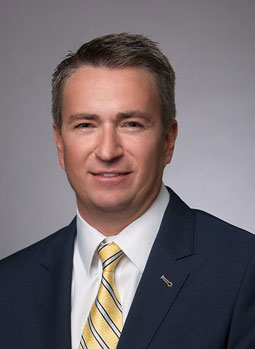
Michael J. McCabe, is a partner and owner of Martino & McCabe and practices in the areas of personally injury, auto accidents, and premises liability. He is a licensed Professional Engineer and received his Bachelor of Science in Civil Engineering from Florida State University. He earned his Juris Doctor degree from Florida Coastal School of Law in 2005 while continuing to work as a Professional Engineer.