

October 13, 2026
Losing a family member in an accident is devastating in ways that no legal process can address. But when that loss results from someone else’s negligence, Florida law gives surviving family members the right to pursue compensation for what they’ve lost. That right exists alongside the grief, and exercising it correctly requires understanding a legal framework that most families encounter for the first time under the worst possible circumstances.
This is a plain-language explanation of how Florida wrongful death claims work, who can bring them, what damages are available, and what the process looks like.
What Makes a Death “Wrongful” Under Florida Law
A wrongful death claim exists when a person dies as a result of another party’s negligence, recklessness, or intentional misconduct. The underlying conduct has to be something that would have supported a personal injury claim if the victim had survived.
Car accidents, truck accidents, medical malpractice, nursing home neglect, workplace accidents, defective products, and premises liability incidents can all give rise to wrongful death claims when a fatality results. The death itself doesn’t create liability. The negligent or wrongful conduct that caused it does.
Florida’s Wrongful Death Act, codified at Florida Statute 768.16 through 768.26, governs the process. It establishes who can bring a claim, what damages are recoverable, and how the proceeds are distributed among survivors.
Who Can Bring a Wrongful Death Claim
Florida wrongful death claims are filed by the personal representative of the deceased person’s estate. That’s typically the person named as executor in the decedent’s will, or someone appointed by the court if there is no will.
The personal representative files on behalf of all eligible survivors. Those survivors, and what they can recover, depend on their relationship to the deceased.
A surviving spouse can recover for loss of companionship and protection, mental pain and suffering, and loss of the decedent’s services. A spouse’s recovery isn’t capped in cases involving negligence, though medical malpractice cases have separate rules.
Minor children can recover for lost parental companionship, instruction, and guidance, as well as mental pain and suffering. Adult children may recover for mental pain and suffering only if there is no surviving spouse.
Parents of a deceased minor child can recover for mental pain and suffering. Parents of a deceased adult child may recover if there is no surviving spouse or children.
Other blood relatives and adoptive siblings who were substantially dependent on the decedent may also have standing in some circumstances.
The estate itself can recover for medical and funeral expenses, lost earnings the decedent would have accumulated from the date of injury to death, and the net accumulations the estate would have received but for the death.
The Two-Year Deadline
Florida’s statute of limitations for wrongful death claims is two years from the date of death. That deadline was reduced from four years to two under HB 837 in 2023.
Two years sounds substantial. It isn’t, given the complexity of wrongful death investigations, the time needed to establish what the deceased would have earned over their lifetime, and the grief that makes families reluctant to engage with the legal process in the immediate aftermath of a loss.
Waiting too long eliminates the right to pursue the claim entirely, regardless of how clear the negligence was. Getting an attorney involved early, even before the family is ready to make formal decisions, allows evidence to be preserved and the investigation to begin without locking anyone into commitments prematurely.
Damages Available in Florida Wrongful Death Cases
Wrongful death damages fall into two categories: those recovered by the estate and those recovered by individual survivors.
Estate damages include medical and funeral expenses, lost earnings from the injury to the date of death, and net accumulations the estate would have received but for the death. Net accumulations are the portion of the decedent’s future earnings they would have saved and left to the estate, after deducting personal expenses. For a high-earning individual with decades of working life ahead, this number can be substantial.
Survivor damages are more personal. A surviving spouse’s claim for loss of companionship and protection addresses the relationship that was severed. Mental pain and suffering encompasses the grief, emotional distress, and psychological impact of the loss. Children’s claims for lost parental companionship address the guidance, nurturing, and relationship they no longer have access to.
These aren’t numbers that calculate themselves. Establishing the value of lost companionship and parental guidance requires presenting the reality of the relationship and the impact of the loss in terms a jury can evaluate. That’s one of the most demanding aspects of a wrongful death case, and one where the quality of legal representation matters most.
Medical Malpractice Wrongful Death: Different Rules
Florida wrongful death claims arising from medical malpractice operate under a separate framework with important differences.
The statute of limitations is two years from when the incident was discovered or should have been discovered, with a four-year outer limit in most cases. There are specific pre-suit investigation requirements, including obtaining an expert affidavit supporting the claim before filing. Damage caps apply to non-economic damages in medical malpractice cases, though those caps have been subject to ongoing constitutional litigation.
Medical malpractice wrongful death cases are among the most complex and vigorously defended claims in Florida. They require expert review, detailed medical record analysis, and attorneys with specific experience in this area.
The Investigation in Wrongful Death Cases
Wrongful death investigations are more extensive than standard injury cases because the stakes are higher and the evidence requirements are more demanding.
Establishing what the deceased would have earned over their lifetime requires vocational analysis, economic projections, and actuarial input. Documenting the nature of family relationships, which affects the value of survivor claims, requires gathering testimony from family members, friends, coworkers, and others who knew the decedent.
In accident cases, the same physical evidence, electronic data, and witness testimony that supports a personal injury claim supports the wrongful death claim. In medical cases, expert review of the treatment and documentation is the foundation. In either case, the investigation needs to begin promptly.
Michael McCabe’s engineering background is relevant in wrongful death cases arising from accidents with technical dimensions: vehicle mechanics, road conditions, structural failures, and the physics of how a crash produced a fatal outcome. These technical questions are evaluated directly rather than delegated to outside consultants, which strengthens both the investigation and the presentation of the case.
The Relationship Between Criminal and Civil Proceedings
When a death results from criminal conduct, such as a drunk driving fatality or an intentional act, criminal charges may run alongside the civil wrongful death claim. The two proceedings are independent. A criminal acquittal doesn’t prevent a civil recovery, and a civil case doesn’t have to wait for the criminal process to conclude.
Criminal proceedings can provide evidence useful in the civil case, including blood alcohol results, admission statements, and findings of fact. A DUI conviction in a fatal crash case, for example, is powerful evidence of negligence in the wrongful death claim. It can also support a punitive damages claim in the civil case, which is separate from any criminal penalties.
Florida allows punitive damages in wrongful death cases when the conduct that caused the death was grossly negligent or intentional. A driver who was well above the legal limit and chose to drive anyway is a candidate for punitive damages. The conduct needs to rise above ordinary negligence to the level of conscious disregard for the safety of others.
How Proceeds Are Distributed
Once a wrongful death case resolves, the proceeds are distributed according to Florida’s Wrongful Death Act. The personal representative oversees this distribution.
Medical and funeral expenses come off the top. Attorney fees and case costs are addressed. What remains is distributed among eligible survivors based on their respective claims and, if the parties can’t agree on the allocation, potentially by court determination.
When there are multiple survivors with different claims, including a spouse, minor children, and adult children, the allocation process can be complicated. An experienced attorney guides the family through this in a way that reflects both the legal framework and the practical realities of the family’s situation.
What Families Should Do
Grief makes clear thinking difficult, and no family should be expected to navigate a legal process while in the immediate aftermath of a loss. But a few practical steps protect the family’s options.
Preserve any evidence connected to the circumstances of the death. Don’t allow vehicles to be repaired or medical records to be discarded. Don’t make statements to insurance companies or other parties without legal advice.
Identify who will serve as the personal representative of the estate. If there’s a will, the named executor typically serves in this role. If there’s no will, the family may need to petition the court to appoint someone.
Consult an attorney. The conversation doesn’t have to be about deciding to file a claim. It can simply be about understanding what options exist, what the deadlines are, and what evidence needs to be preserved. That information is available at no cost and gives the family time to make decisions thoughtfully rather than under pressure.
Martino & McCabe Handles Wrongful Death Claims Throughout Northeast Florida
Nicholas Martino and Michael McCabe have handled wrongful death cases arising from car accidents, truck accidents, and other negligent conduct throughout Ponte Vedra Beach, Jacksonville, St. Johns County, Duval County, and Clay County.
If your family has lost someone and you want to understand what your rights are, that conversation is where this starts.
Call (904) 999-4657 or reach out at consultation@martinomccabe.com. The consultation is free, and there’s no obligation.
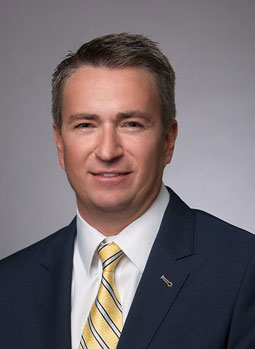
Michael J. McCabe, is a partner and owner of Martino & McCabe and practices in the areas of personally injury, auto accidents, and premises liability. He is a licensed Professional Engineer and received his Bachelor of Science in Civil Engineering from Florida State University. He earned his Juris Doctor degree from Florida Coastal School of Law in 2005 while continuing to work as a Professional Engineer.