

October 13, 2026
After a car accident in Jacksonville, most people assume the at-fault driver is the only party responsible for their injuries and damages. However, Florida law recognizes that multiple parties can share liability for a single accident. Understanding third-party car accident claims Jacksonville victims pursue can make a significant difference in the compensation you receive. Whether you’re dealing with a vehicle defect accident, employer negligence, or government entity responsibility, identifying all liable parties is crucial to recovering full damages. Third party liability Florida cases often involve complex investigations, multiple insurance policies, and specialized legal expertise. This guide explains when others beyond the driver may be held accountable and how our firm helps accident victims pursue compensation from every responsible party.
What is Third-Party Liability in Car Accidents?
Third-party liability extends accident responsibility beyond the driver who directly caused your crash. In legal terms, a third party is any individual or entity whose negligence, actions, or products contributed to the accident, even if they weren’t behind the wheel. These claims are more complex than standard car accident cases because they require proving that additional parties bear legal responsibility for your injuries.
Understanding Florida’s Comparative Negligence System
Florida follows a modified comparative negligence system, which means multiple parties can share fault for an accident. When we investigate third-party car accident claims Jacksonville injury attorneys handle, we look beyond the obvious to identify every entity that played a role in causing or worsening your injuries. This comprehensive approach often uncovers compensation sources that accident victims would otherwise miss.
Common Third-Party Claim Scenarios
Third-party claims arise in numerous situations. A delivery driver rushing to meet unrealistic deadlines set by their employer causes a collision. A vehicle manufacturer releases cars with defective braking systems that fail at critical moments. A government agency neglects to repair a dangerous intersection despite multiple complaints. A repair shop installs incorrect parts that lead to mechanical failure. In each scenario, parties other than the driver share legal responsibility.
Why Third-Party Claims Matter for Compensation
The stakes are particularly high in third-party liability cases. While an individual driver might have minimal insurance coverage, employers, manufacturers, and government entities typically have substantially larger insurance policies or assets. This means victims can often recover significantly more compensation when all liable parties are held accountable. However, these entities also have powerful legal teams fighting to minimize or deny their responsibility.
Understanding car manufacturer liability is especially important in today’s automotive landscape. Modern vehicles contain thousands of components, and when any critical system fails, the results can be catastrophic. From airbags that don’t deploy to electronic stability control systems that malfunction, vehicle defect accidents represent a significant category of third-party claims.
Successfully pursuing third party liability Florida claims requires extensive investigation, expert analysis, and aggressive legal representation. Insurance companies representing third parties often dispute their client’s involvement or try to shift blame back to the driver or victim. That’s why working with experienced attorneys who understand how to prove third-party liability makes all the difference in these complex cases.
Vehicle Manufacturer Defects and Product Liability
Vehicle defect accidents occur when faulty design, manufacturing errors, or inadequate warnings make a car unsafe for normal use. Car manufacturer liability cases fall under product liability law, which holds companies responsible when their defective products cause injuries. These cases are among the most challenging third-party claims because they require proving that a specific defect existed and directly caused the accident.
Three Types of Vehicle Defects
Vehicle defects take three primary forms. Manufacturing defects happen during production when a vehicle or component is built incorrectly, affecting only specific vehicles rather than an entire model line. For example, if a brake line is improperly installed at the factory, that individual vehicle has a manufacturing defect even though the design itself is sound. Design defects are inherent flaws in how a vehicle or system was engineered, affecting every vehicle of that make and model. The notorious Ford Pinto fuel tank design that made the cars prone to fires in rear-end collisions is a classic example. Warning defects occur when manufacturers fail to adequately inform consumers about known risks or provide insufficient instructions for safe operation.
Most Common Defects Leading to Accidents
The most common vehicle defects leading to accidents include brake system failures, airbag malfunctions, tire blowouts, steering problems, seat belt defects, fuel system issues, and electronic control failures. Modern vehicles rely heavily on computer systems, and software glitches can cause sudden acceleration, power loss, or stability control failures. The massive Takata airbag recall affected millions of vehicles when airbags exploded with excessive force, sending shrapnel into vehicle occupants. General Motors faced thousands of claims over ignition switches that unexpectedly shut off engines, disabling power steering, brakes, and airbags.
Expert Analysis Required for Manufacturer Claims
Proving car manufacturer liability requires substantial evidence and expert testimony. Accident reconstruction specialists analyze crash dynamics to determine whether vehicle performance matched expected standards. Automotive engineers examine failed components to identify whether defects existed before the crash. Materials scientists test whether parts were made from appropriate materials and met industry specifications. Human factors experts evaluate whether design choices made vehicles difficult to operate safely.
Preserving Critical Evidence
We preserve crucial evidence immediately after vehicle defect accidents. The damaged vehicle must be secured to prevent tampering or further damage. We photograph all damage, document vehicle conditions, and obtain the vehicle’s complete maintenance history. Black box data from event data recorders provides critical information about vehicle speed, braking, steering inputs, and system status immediately before impact.
Investigating Manufacturer Knowledge
Investigating potential defects means reviewing Technical Service Bulletins from manufacturers, searching National Highway Traffic Safety Administration databases for similar complaints, examining recall notices for the vehicle and its components, and consulting with engineers who specialize in automotive safety. Sometimes we discover that manufacturers knew about defects before our client’s accident but failed to issue recalls or adequately warn consumers.
These cases often involve multiple defendants. The vehicle manufacturer might blame the parts supplier, who points to the repair shop, who claims the owner didn’t maintain the vehicle properly. We work through these complicated relationships to hold every responsible party accountable. Product liability law in Florida allows us to pursue compensation from manufacturers, parts suppliers, distributors, and sellers when their products cause injuries.
The timeline for vehicle defect cases can be lengthy because of the extensive investigation and expert analysis required. However, the compensation often justifies the effort. When we prove that a design or manufacturing defect caused an accident, we can recover damages not just for one victim but potentially help trigger recalls that protect thousands of other drivers.
Employer Liability in Commercial Vehicle Accidents
Employers bear legal responsibility for accidents caused by their employees under the doctrine of respondeat superior, which holds companies liable for employee actions performed within the scope of employment. Employer liability represents one of the most common types of third-party car accident claims Jacksonville attorneys handle, particularly with the explosion of delivery services and commercial transportation.
When Companies Are Responsible for Employee Actions
Company vehicles driven by employees on work-related tasks create clear employer liability. When a delivery driver, sales representative, or service technician causes an accident while performing job duties, their employer typically shares full responsibility. This applies whether the employee drives a company-owned vehicle or their personal car for business purposes. The critical factor is whether the employee was furthering the employer’s business interests at the time of the accident.
Independent Contractor vs. Employee Status
Determining employment status is often where these cases become complicated. Companies frequently classify workers as independent contractors to avoid liability for accidents. However, Florida law looks beyond labels to examine the actual working relationship. If the company controls when, where, and how work is performed, workers are likely employees regardless of what their contracts say. We recently handled a case where a delivery company claimed their driver was an independent contractor, but we proved the company controlled his routes, schedules, delivery procedures, and even which uniform he wore. The court agreed the driver was effectively an employee, making the company liable for the accident he caused.
Negligent Hiring and Supervision Claims
Negligent hiring, training, and supervision create additional grounds for employer liability. Companies must conduct reasonable background checks before hiring drivers, provide adequate training for job requirements, properly supervise employees to ensure safe practices, and take corrective action when employees demonstrate unsafe behavior. When employers cut corners on these responsibilities and their employees cause accidents, they can be held liable even beyond standard respondeat superior doctrine.
Commercial Trucking Company Regulations
Commercial trucking companies face particularly strict regulations and liability exposure. Federal Motor Carrier Safety Regulations require thorough driver qualification files, regular vehicle inspections and maintenance, limits on driving hours to prevent fatigue, and drug and alcohol testing programs. Violations of these regulations strengthen third party liability Florida claims against trucking companies. We’ve successfully proven employer liability by documenting how companies pressured drivers to exceed hour-of-service limits, ignored maintenance requirements to keep trucks on the road, or hired drivers with disqualified licenses.
Rideshare and delivery app companies present unique liability questions. These companies often claim drivers are independent contractors operating their own businesses. However, their extensive control over driver behavior, rates, and customer relationships often indicates an employment relationship. Florida courts examine factors like who sets compensation, who provides necessary equipment, whether the work requires special skills, and whether the relationship is temporary or ongoing.
The advantage of establishing employer liability is significant. Individual drivers often carry minimal insurance coverage, but commercial entities maintain substantial policies or have corporate assets to cover damages. Florida law requires commercial vehicles to carry higher insurance minimums than personal vehicles, and many companies purchase excess liability policies worth millions of dollars.
Proving employer liability requires thorough investigation of employment relationships, company policies and procedures, training records and driver qualification files, vehicle maintenance logs, electronic logging device data for commercial drivers, and communication records between employers and drivers. We subpoena company records, depose managers and supervisors, and work with industry experts who understand commercial transportation standards.
Government Entity Liability for Road Conditions
Government entities including the Florida Department of Transportation, city of Jacksonville, Duval County, and other municipalities can be held liable when dangerous road conditions contribute to accidents. However, suing government entities involves special rules and much shorter deadlines than standard personal injury claims. Understanding these requirements is crucial for successful third party liability Florida cases involving government negligence.
Florida’s Sovereign Immunity Waiver
Sovereign immunity traditionally protected government entities from lawsuits, but Florida has waived immunity in certain situations under Florida Statutes Section 768.28. This law allows claims against government entities for negligent acts or omissions that cause injury, property damage, or death. However, recovery is capped at $200,000 per person and $300,000 per incident unless the Florida Legislature approves a claims bill for amounts exceeding these limits.
Dangerous Road Conditions That Create Liability
Common dangerous road conditions that create government liability include potholes and pavement deterioration, missing or faded traffic signs and signals, inadequate road lighting in high-accident areas, poorly designed intersections with visibility problems, missing or damaged guardrails, construction zone hazards without proper warning, debris or obstacles left in roadways, and insufficient drainage causing flooding or ice accumulation. The critical question is whether the government entity had actual or constructive notice of the dangerous condition and reasonable time to fix it but failed to act.
Proving Government Knowledge and Negligence
Proving government liability requires demonstrating that the dangerous condition existed, the government entity knew or should have known about it, the entity had sufficient time to repair or warn about the hazard, and the dangerous condition directly caused the accident and injuries. For example, if a pothole has existed for months and residents complained to the city multiple times, but no repairs were made before it caused an accident, the city may be liable. However, if a tree branch fell into the road minutes before your accident, the government likely didn’t have constructive notice or reasonable time to respond.
Strict Notice Requirements
Florida law imposes strict notice requirements for claims against government entities. You must provide written notice of your claim within three years for the state or its agencies, and within three years for counties and municipalities. However, many local governments require notice within much shorter timeframes specified in their ordinances. Some Jacksonville-area municipalities require notice within days or weeks after an accident. Missing these deadlines can permanently bar your claim regardless of how strong your case is.
The notice must include specific information: your name and address, the time, place, and circumstances of the accident, the nature of your injuries and damages, and the amount of compensation sought. We help clients prepare comprehensive notices that meet all technical requirements while preserving their legal rights.
Investigation is crucial in government liability cases. We immediately document road conditions with photographs and videos, obtain weather records and traffic camera footage if available, review government maintenance records and work orders, interview witnesses who can testify about how long conditions existed, and consult with traffic engineers who can evaluate whether road design met safety standards. We also submit public records requests to obtain complaint records, inspection reports, and correspondence showing the government entity’s knowledge of dangerous conditions.
These cases often involve complex defenses. Government entities may argue they didn’t have notice of the specific problem, the condition wasn’t unreasonably dangerous, they exercised reasonable care in maintaining the road, or your own negligence caused the accident. They might claim they’re immune from liability under exceptions to the sovereign immunity waiver, such as discretionary function immunity for policy decisions.
Successfully navigating government liability claims requires attorneys experienced with Florida’s notice requirements and sovereign immunity laws. We’ve helped numerous Jacksonville accident victims recover compensation from government entities whose negligence contributed to their crashes. While the damage caps limit recovery compared to claims against private parties, holding government entities accountable often leads to repairs that prevent future accidents.
Proving Third-Party Car Accident Claims Jacksonville Courts
Successfully establishing third-party car accident claims Jacksonville victims file requires meeting specific legal standards and overcoming aggressive defense strategies. Third-party defendants typically have extensive resources and experienced legal teams fighting to deny or minimize their responsibility. Understanding what evidence courts require and how to present compelling proof is essential for recovering full compensation.
Legal Standards for Third-Party Liability
Florida law requires plaintiffs to prove liability by a preponderance of the evidence, meaning it’s more likely than not that the defendant’s negligence caused your injuries. For third-party claims, we must establish four key elements: the defendant owed you a duty of care, they breached that duty through negligent action or inaction, their breach directly caused the accident and your injuries, and you suffered actual damages as a result.
Duty and Breach by Defendant Type
The specific duty and breach vary by defendant type. Vehicle manufacturers have a duty to design and build safe products and must warn consumers about known risks. They breach this duty when they release defective vehicles or fail to issue timely recalls for dangerous defects. Employers have a duty to properly hire, train, and supervise employees who operate vehicles for business purposes. They breach this duty by hiring unqualified drivers, pressuring employees to work unsafely, or failing to maintain company vehicles. Government entities have a duty to maintain roads in reasonably safe condition and must address known hazards within reasonable timeframes.
Establishing Causation Through Evidence
Causation is often the most contested element in third-party liability cases. Defendants argue that driver error, not their negligence, caused the accident. In vehicle defect accidents, manufacturers claim the damage resulted from the crash rather than causing it. Employers insist their drivers were acting outside the scope of employment when accidents occurred. We overcome these defenses through comprehensive evidence including accident reconstruction analysis, expert testimony from industry specialists, electronic data from vehicles and other sources, eyewitness statements, and documentation of the defendant’s knowledge of risks.
Critical Role of Expert Witnesses
Expert witnesses play a crucial role in proving third-party claims. Automotive engineers analyze failed components to determine whether defects existed before the crash and whether those defects made the vehicle unsafe. Accident reconstructionists use physics and mathematics to determine crash dynamics and identify contributing factors. Medical experts connect your injuries to the specific accident caused by the defendant’s negligence. Industry experts testify about relevant standards of care and whether defendants met those standards.
Discovery Process for Gathering Evidence
Discovery is the phase where we gather evidence from defendants. Through interrogatories, document requests, depositions, and subpoenas, we obtain internal company communications, safety records and complaint files, design and testing documents, employee training and qualification records, maintenance logs and inspection reports, and correspondence showing knowledge of hazards. Defendants often resist producing documents that reveal their liability, making experienced counsel essential for enforcing discovery rights.
Florida’s comparative negligence system allows defendants to reduce their liability by proving you contributed to the accident. They might claim you were speeding, distracted, or failed to maintain your vehicle properly. We protect clients from unfair blame-shifting by thoroughly documenting facts, immediately investigating accident scenes, gathering favorable witness statements, and obtaining evidence showing defendants’ negligence was the primary cause.
The burden of proof in vehicle defect accident cases can be particularly challenging. We must show the specific defect existed when the vehicle left the manufacturer’s control, the vehicle was being used as intended when the defect caused the accident, and the defect was the proximate cause of your injuries. Defendants argue that aftermarket modifications, poor maintenance, or misuse caused the failure rather than any original defect. Preserving the vehicle in its post-accident condition and obtaining expert analysis quickly is critical.
Multiple defendants in third-party cases often point fingers at each other, each trying to shift blame to someone else. While this can complicate litigation, it also works to our advantage. When defendants contradict each other’s testimony or blame each other, they often undermine their own defenses. We strategically use their conflicting positions to establish liability more clearly.
How Attorneys Identify All Liable Parties
Maximizing compensation in third-party car accident claims Jacksonville lawyers pursue requires identifying every potentially liable party from the beginning. Many accident victims settle too quickly with obvious defendants, only to discover later that other parties shared responsibility. Our thorough investigation process uncovers all liable parties so you can pursue complete compensation for your injuries.
Immediate Post-Accident Investigation
Our investigation begins immediately after we take your case. The first 72 hours after an accident are critical for preserving evidence that might otherwise be lost, destroyed, or degraded. We visit accident scenes to document conditions, identify and interview witnesses before memories fade, obtain police reports and initiate supplemental investigations, send preservation letters to prevent evidence destruction, and secure damaged vehicles to prevent tampering or disposal.
Multi-Faceted Investigation Approach
We examine multiple aspects of each accident to identify potential third parties. For the vehicle and its components, we review maintenance records to identify responsible repair shops, search for recalls or Technical Service Bulletins for defective parts, inspect the vehicle for signs of mechanical failure, and analyze event data recorder information showing vehicle performance. For the driver, we investigate their employment status and whether they were working, determine whether they were operating a rental or borrowed vehicle, and review driving history for patterns that owners or employers should have known about.
Public Records and Database Searches
Public records provide crucial information for identifying liable parties. We file requests with government agencies for road maintenance records and complaint histories, traffic camera footage from municipal systems, business registrations and insurance policies, and corporate records showing business relationships and ownership structures. These documents often reveal connections between parties that aren’t immediately obvious.
Database searches help us identify additional defendants. We check National Highway Traffic Safety Administration complaint databases for similar defect reports, Florida Department of Transportation crash databases for pattern evidence, and commercial driver databases for employment history and safety records. When patterns emerge showing that similar accidents occurred under similar circumstances, this strengthens claims against manufacturers, employers, or government entities.
Industry Expertise and Investigation Networks
Industry expertise guides our investigation strategies. We consult with specialists who understand specific industries and can identify which parties typically bear responsibility. Transportation industry experts know how trucking companies, brokers, and shippers share liability for commercial vehicle accidents. Automotive engineers understand the complex supply chains for vehicle parts and which manufacturers might be liable for component failures. Employment law specialists help us distinguish true independent contractors from misclassified employees.
Following the money trail often uncovers liable parties. We investigate insurance policies covering the driver, vehicle owner, employer, and any other involved parties. Sometimes we discover multiple applicable policies or parties with significant assets beyond insurance coverage. Understanding who carries what coverage helps us develop strategies for maximizing recovery from all available sources.
Depositions and interrogatories reveal additional defendants that weren’t initially apparent. When we question drivers under oath about their employment, they often provide information about relationships with multiple companies. Vehicle owners disclose who performed maintenance and repairs. Business entities reveal complex corporate structures with multiple potentially liable entities. Each answer opens new investigative paths.
We work with a network of investigators and experts who specialize in different aspects of third-party liability. Private investigators conduct surveillance and interviews to develop evidence. Former insurance adjusters understand how to interpret policy language and identify coverage. Forensic accountants trace business relationships and asset structures. This team approach ensures no potential defendant escapes our investigation.
Frequently Asked Questions
How long do I have to file a third-party claim in Florida?
Florida’s statute of limitations for personal injury claims is generally two years from the accident date. However, claims against government entities require much shorter notice periods, sometimes just days or weeks. Third-party car accident claims Jacksonville residents file should be evaluated by an attorney immediately to preserve all legal rights.
Can I sue multiple parties for the same accident?
Yes, Florida law allows you to pursue claims against all parties whose negligence contributed to your accident. This is often advantageous because it increases potential compensation sources beyond what a single at-fault driver might have available through their insurance policy.
What if the at-fault driver was uninsured?
Identifying third parties becomes even more critical when the at-fault driver lacks insurance. Vehicle defect accidents, employer liability, or government entity negligence may provide the only realistic path to compensation for your injuries.
How do vehicle defect accident claims differ from regular accident cases?
Vehicle defect cases require proving the specific defect existed and caused the accident, typically through expert testimony and extensive investigation. These cases often take longer but can result in substantial compensation from manufacturers with significant assets and insurance coverage.
Do I need a lawyer for third party liability Florida claims?
Third-party claims involve complex legal issues, multiple defendants, and aggressive defense strategies. Experienced legal representation significantly increases your chances of identifying all liable parties and recovering full compensation for your injuries.
Free Case Review for Third-Party Car Accident Claims Jacksonville
If you’ve been injured in a car accident in Jacksonville, don’t assume the at-fault driver is your only option for compensation. Our experienced attorneys thoroughly investigate every accident to identify all parties whose negligence contributed to your injuries. We handle third-party car accident claims Jacksonville victims rely on involving vehicle defects, employer liability, government negligence, and more.
Contact us today for a free, no-obligation case evaluation. We’ll review the facts of your accident, explain your legal options, and outline our strategy for pursuing maximum compensation. Call a Jacksonville car accident lawyer now or complete our online form to schedule your complimentary consultation.
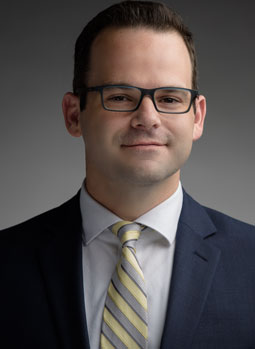
Nicholas E. Martino is a partner and owner of Martino & McCabe and practices in the area of personal injury, auto accidents, medical malpractice, nursing home abuse, and premises liability. Mr. Martino earned his Masters of Law in Trial Advocacy with Honors from Temple University, Beasley School of Law which is at the forefront of teaching trial advocacy, and has consistently been ranked by U.S. News & World Report in the top two in the country. Mr. Martino received his Juris Doctor degree from Florida Coastal School of Law.